
Antiemetics are drugs used to prevent or suppress vomiting (emesis). Emesis is coordinated by the Vomiting Centre (VC) in the medulla, which receives afferent inputs from four primary pathways:
- Chemoreceptor Trigger Zone (CTZ): Located in the area postrema (floor of the fourth ventricle); lacks an effective blood–brain barrier (BBB) and is rich in D2, 5-HT3, and NK1 receptors.
- Vestibular Apparatus: Mediates motion sickness via H1 and muscarinic (M1) receptors.
- Gastrointestinal Tract (GIT) & Heart: Vagal and sympathetic afferents triggered by mucosal irritation or chemotherapy-induced 5-HT release from enterochromaffin cells.
- Higher Cortical Centres: Sight, smell, memory, and emotional stress.
Classification of Antiemetics & prokinetic drugs
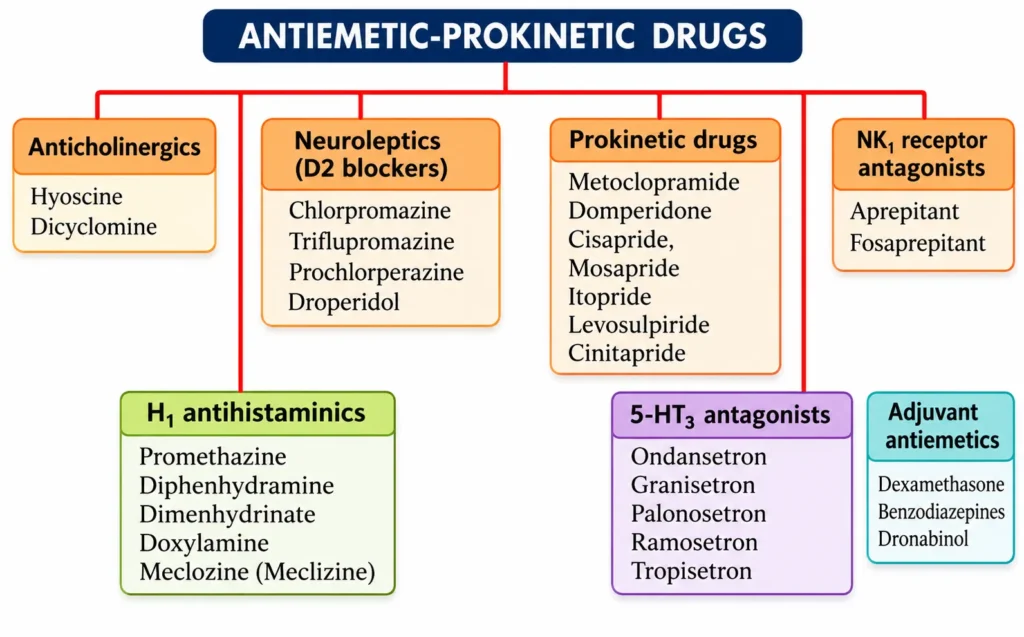
1. Classification of Antiemetics
| Pharmacological Class | Representative Drugs | Primary Receptors Blocked |
|---|---|---|
| 1. Anticholinergics | Hyoscine (Scopolamine), Dicyclomine | Muscarinic (M1) |
| 2. H1 Antihistaminics | Promethazine, Diphenhydramine, Dimenhydrinate, Doxylamine, Meclozine (Meclizine), Cinnarizine | Histamine (H1) + Muscarinic (M1) |
| 3. Neuroleptics (D2 Blockers) | Chlorpromazine, Triflupromazine, Prochlorperazine, Droperidol | Dopamine (D2) |
| 4. Prokinetic Drugs | Metoclopramide, Domperidone, Cisapride, Mosapride, Itopride, Levosulpiride, Cinitapride | D2 antagonism + 5-HT4 agonism (weak 5-HT3 block at high doses) |
| 5. 5-HT3 Antagonists | Ondansetron, Granisetron, Palonosetron, Ramosetron, Tropisetron | Serotonin (5-HT3) |
| 6. NK1 Receptor Antagonists | Aprepitant, Fosaprepitant | Neurokinin-1 (NK1 / Substance P) |
| 7. Adjuvant Antiemetics | Dexamethasone, Benzodiazepines (Lorazepam, Diazepam), Dronabinol, Nabilone | Anti-inflammatory / GABAergic / CB1 receptors |
2. Detailed Pharmacology by Drug Class
Anticholinergics
- Prototype: Hyoscine (Scopolamine)
- Mechanism of Action: Blocks muscarinic (M1) receptors in the vestibular apparatus and nucleus tractus solitarius (NTS), interrupting emetic conduction to the vomiting centre.
- Clinical Use: Most effective drug for motion sickness. Administered orally or as a transdermal patch applied behind the pinna (acts for up to 72 hours).
- Adverse Effects & Limitations: Dry mouth, blurred vision, sedation, urinary retention, and constipation. Ineffective in vomiting induced by CTZ stimulation (e.g., cytotoxic chemotherapy or uremia).
H1 Antihistaminics
- Drugs: Promethazine, Diphenhydramine, Dimenhydrinate, Doxylamine, Meclozine, Cinnarizine.
- Mechanism of Action: Antagonize H1 receptors and exert central anticholinergic (M1) effects on vestibular pathways. Cinnarizine additionally inhibits Ca2+ influx from endolymph into vestibular sensory cells.
- Clinical Uses:
- Motion sickness & Labyrinthine disorders: Promethazine, dimenhydrinate, meclozine, and cinnarizine (preferred for vertigo).
- Morning sickness (pregnancy): Doxylamine (combined with pyridoxine / vitamin B6) is the drug of choice due to established fetal safety.
- Adverse Effects: Sedation, drowsiness, and mild anticholinergic symptoms.
Neuroleptics (D2 Antagonists)
- Drugs: Chlorpromazine, Prochlorperazine, Haloperidol.
- Mechanism of Action: Block D2 receptors in the CTZ, preventing emetic impulses from reaching the vomiting centre.
- Clinical Uses: Drug-induced, disease-induced (uremia, gastroenteritis, radiation), and postoperative vomiting. Prochlorperazine is also highly effective in labyrinthine vertigo.
- Adverse Effects: Extrapyramidal symptoms (acute dystonia, akathisia), sedation, and postural hypotension.
Prokinetic Drugs (Metoclopramide vs. Domperidone)
Prokinetics enhance coordinated upper GI motility and accelerate gastric emptying while exerting central antiemetic effects.
| Feature | Metoclopramide | Domperidone |
|---|---|---|
| Mechanism | Central & peripheral D2 antagonist; 5-HT4 agonist (increases ACh release from myenteric plexus); weak 5-HT3 antagonist at high doses | Peripheral D2 antagonist (does not cross BBB significantly) |
| GI Actions | Increases lower esophageal sphincter (LES) tone, enhances gastric peristalsis, relaxes pylorus and duodenum | Similar upper GI prokinetic action without 5-HT4 agonism |
| CNS Adverse Effects | Crosses BBB: Sedation, restlessness, extrapyramidal symptoms (dystonia), galactorrhea/gynecomastia (hyperprolactinemia) | Minimal CNS effects (no extrapyramidal symptoms); causes hyperprolactinemia (pituitary lies outside BBB) |
| Key Uses | GERD, gastroparesis, postoperative/drug-induced vomiting, hiccups (contraindicated in mechanical intestinal obstruction) | Levodopa/bromocriptine-induced vomiting (preserves central antiparkinsonian action), pediatric vomiting |
Other Prokinetics: Mosapride (selective 5-HT4 agonist) and Itopride (peripheral D2 blocker + acetylcholinesterase inhibitor) lack significant cardiac toxicity, unlike Cisapride (withdrawn due to QT prolongation and torsades de pointes).
5-HT3 Receptor Antagonists
- Drugs: Ondansetron (prototype), Granisetron, Palonosetron, Ramosetron.
- Mechanism of Action: Selectively block 5-HT3 receptors both peripherally on vagal nerve terminals in the GI mucosa and centrally in the CTZ and NTS. Cytotoxic drugs and radiation damage enterochromaffin cells, releasing large amounts of serotonin (5-HT) that trigger this reflex.
- Pharmacokinetics:
- Ondansetron: Oral bioavailability ~60–70% (first-pass metabolism); elimination half-life (t1/2) is 3–5 hours.
- Palonosetron: Second-generation agent with highest 5-HT3 receptor affinity and longest t1/2 (~40 hours); effective against both acute and delayed chemotherapy-induced emesis.
- Clinical Uses: Drug of choice for chemotherapy-induced nausea and vomiting (CINV) and radiation-induced emesis; also used in postoperative nausea and vomiting (PONV) and hyperemesis gravidarum (second-line). Ineffective in motion sickness.
- Adverse Effects: Headache, constipation (or mild diarrhea), abdominal discomfort, and dose-dependent QT interval prolongation (especially with IV ondansetron).
NK1 Receptor Antagonists
- Drugs: Aprepitant (oral), Fosaprepitant (IV water-soluble prodrug converted rapidly to aprepitant).
- Mechanism of Action: Cross the BBB and selectively block neurokinin-1 (NK1) receptors in the CTZ and NTS, inhibiting the action of Substance P.
- Clinical Use: Combined with a 5-HT3 antagonist and dexamethasone to prevent both acute and delayed CINV caused by highly emetogenic chemotherapy (e.g., cisplatin).
- Drug Interactions: Moderate inhibitor and inducer of CYP3A4 (increases plasma levels of dexamethasone—requiring ~50% oral dose reduction—and warfarin; reduces efficacy of oral contraceptives).
- Adverse Effects: Fatigue, hiccups, anorexia, and mild elevation of hepatic transaminases.
Adjuvant Antiemetics
- Dexamethasone: Enhances the efficacy of 5-HT3 and NK1 antagonists in acute and delayed CINV by reducing peritumoral inflammation and prostaglandin synthesis.
- Benzodiazepines (Lorazepam): Suppress anticipatory vomiting occurring prior to chemotherapy through anxiolytic and amnesic actions.
- Cannabinoids (Dronabinol, Nabilone): Activate central CB1 receptors in the vomiting centre; reserved for refractory CINV due to dysphoria, hallucinations, and sedation.
3. Summary of Drugs of Choice by Clinical Indication
| Clinical Condition | First-Line / Drug of Choice |
|---|---|
| Motion sickness | Hyoscine (prophylaxis), Promethazine, Dimenhydrinate, Cinnarizine |
| Morning sickness (Pregnancy) | Doxylamine + Pyridoxine (Vitamin B6) |
| Chemotherapy-induced emesis (Acute) | 5-HT3 antagonist (Ondansetron / Palonosetron) + Dexamethasone |
| Chemotherapy-induced emesis (Delayed) | Aprepitant + Dexamethasone (+ Palonosetron) |
| Anticipatory vomiting | Lorazepam |
| Levodopa-induced vomiting | Domperidone |
| Postoperative vomiting (PONV) | Ondansetron, Dexamethasone, Metoclopramide |
Previous Year Question Papers
Strengthen your exam preparation with previous year question papers, exam-wise practice and answer keys.
Drug Inspector & DCO
Explore Drug Inspector and Drug Control Officer previous year question papers from UPSC and various State Public Service Commissions.
Pharmacist Previous Year Papers
Practice previous year question papers for AIIMS, RRB, ESIC, DSSSB, CGHS and various Central and State Government pharmacist exams.

